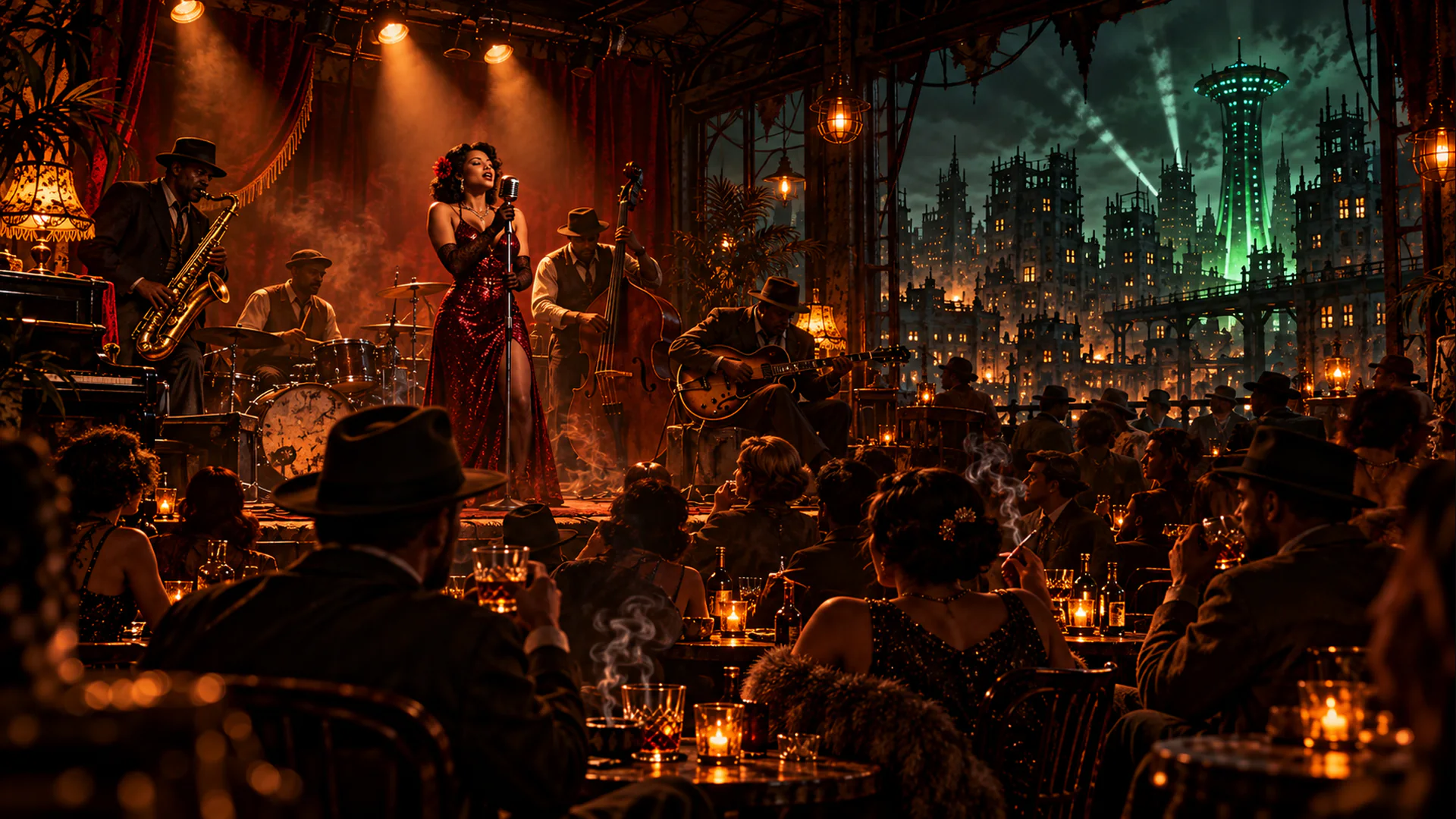
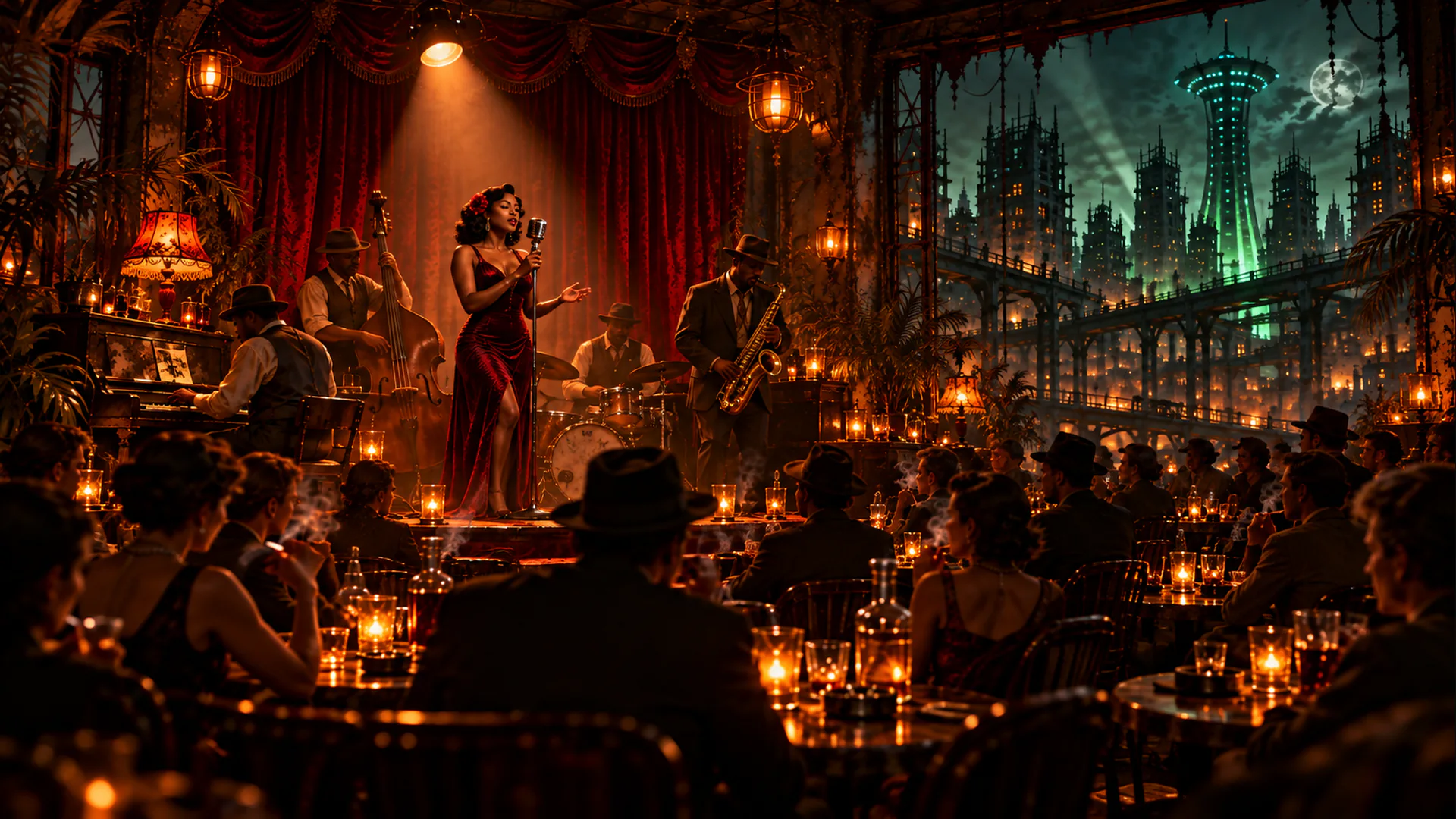
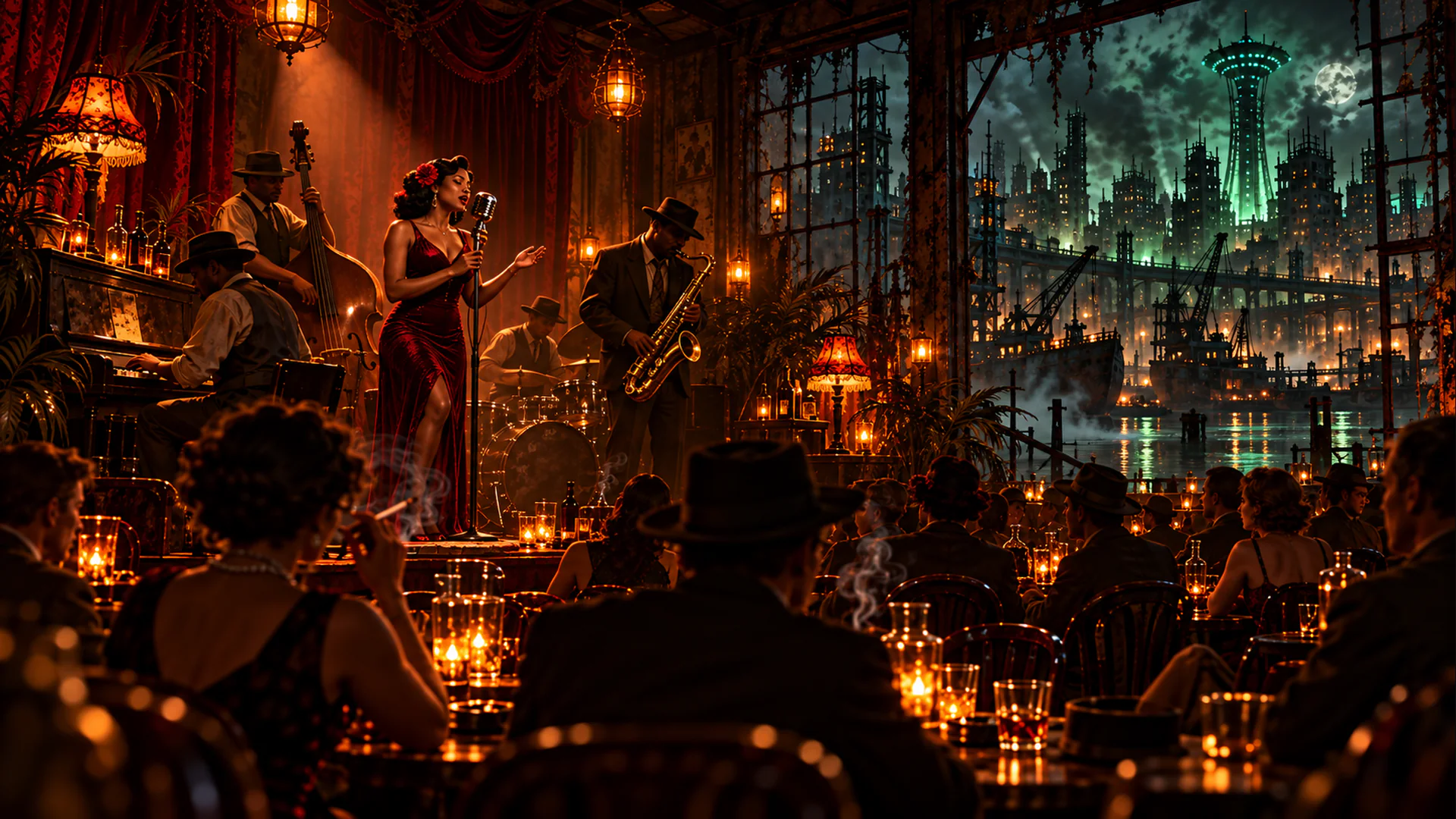
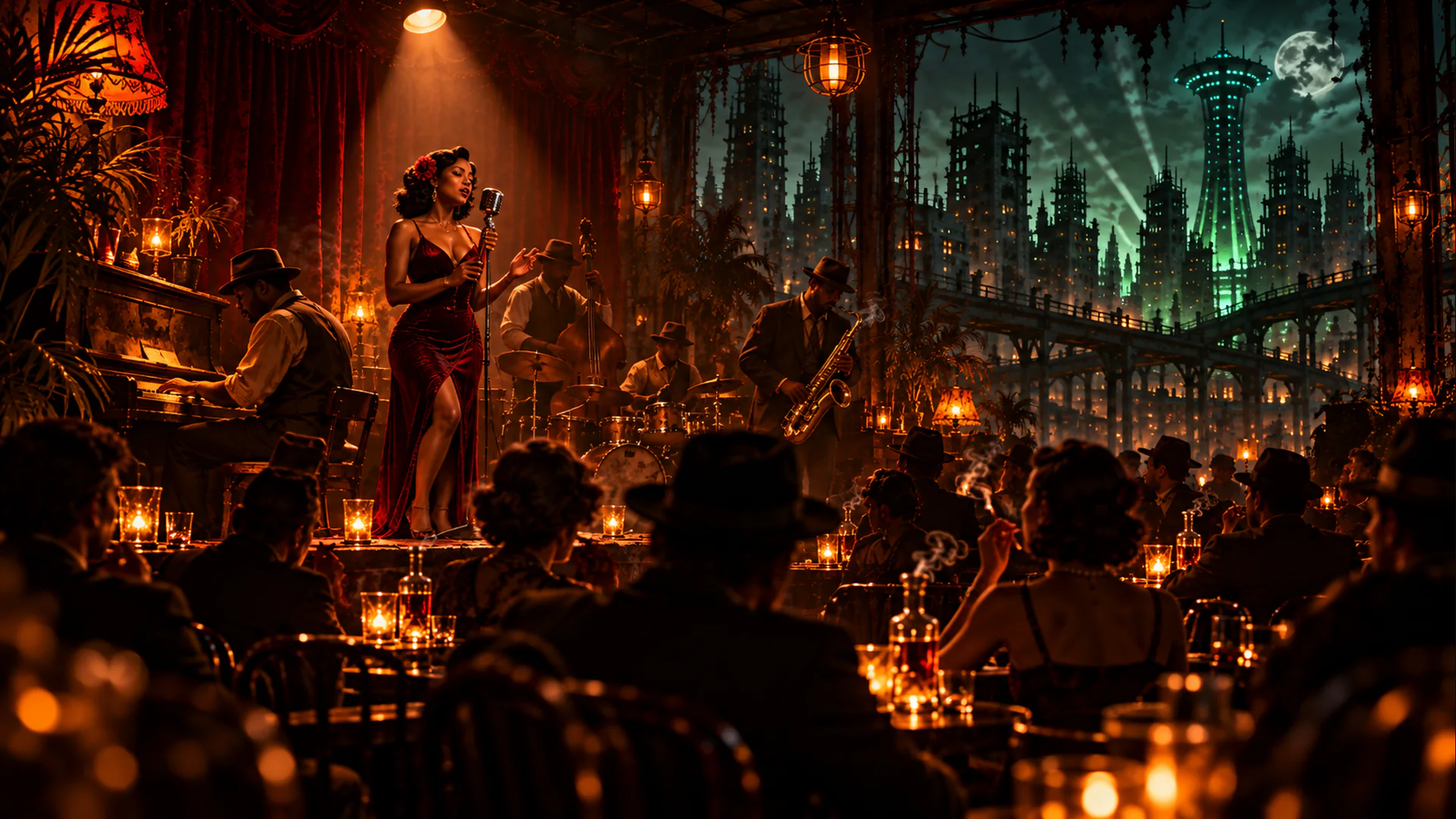
Welcome to Goodneighbor. Live radio and videos are free for everyone. A verified account adds member chat and one daily lyric draft. Subscribers get on-demand listening and three daily lyric drafts. Purchased and administrator-unlocked recordings can be downloaded. On-demand listening is for subscribers.
The stories behind the sound
The Reading Room.
Explore the history of the blues, watch the picture show, and follow the words as the music plays. Take the long way through the sound.
33⅓
16 chapters. About 27 minutes of stories. Stay awhile.
The Listening NotesA Voice of Your Own
Scene 1 of 3
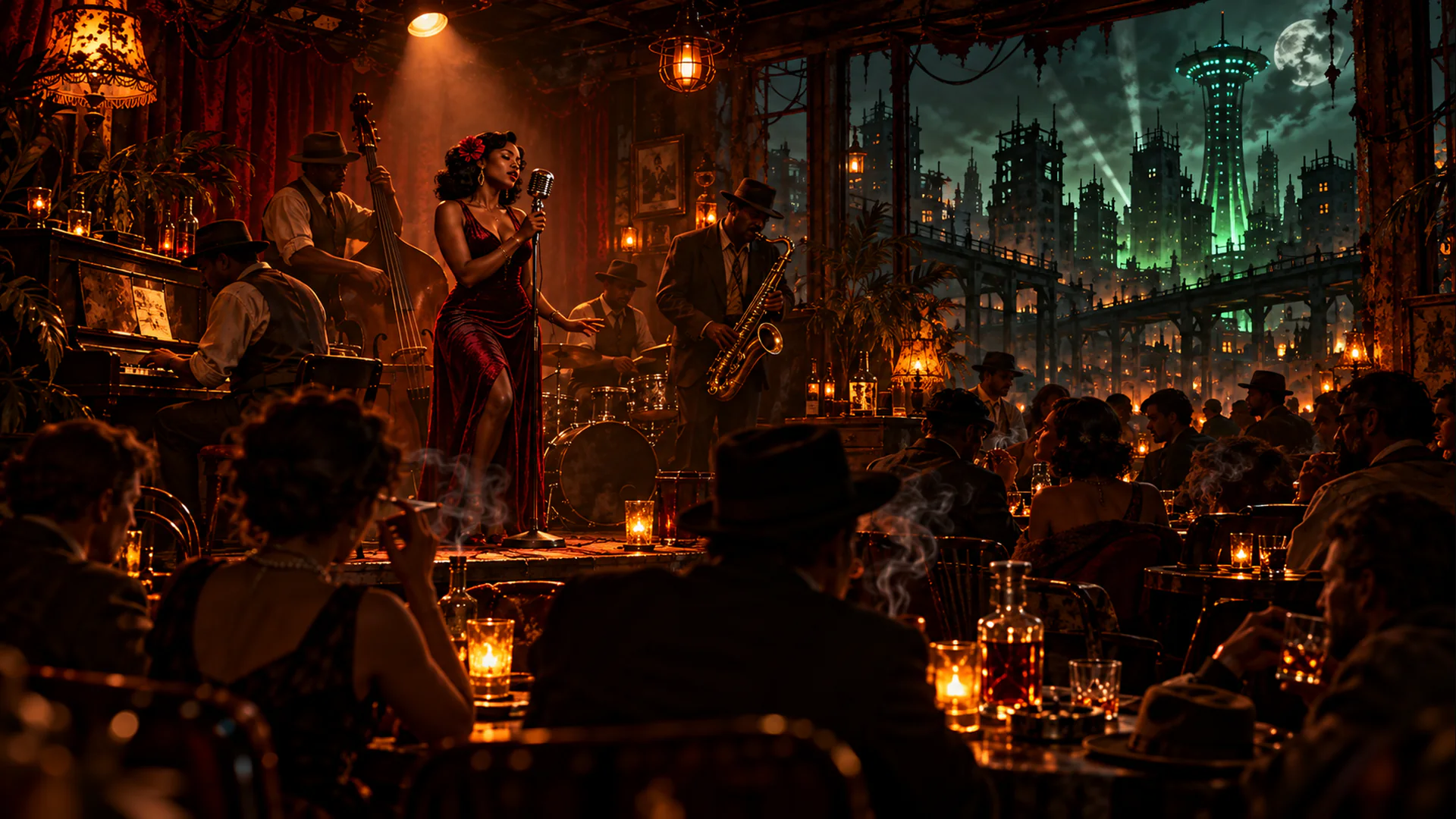
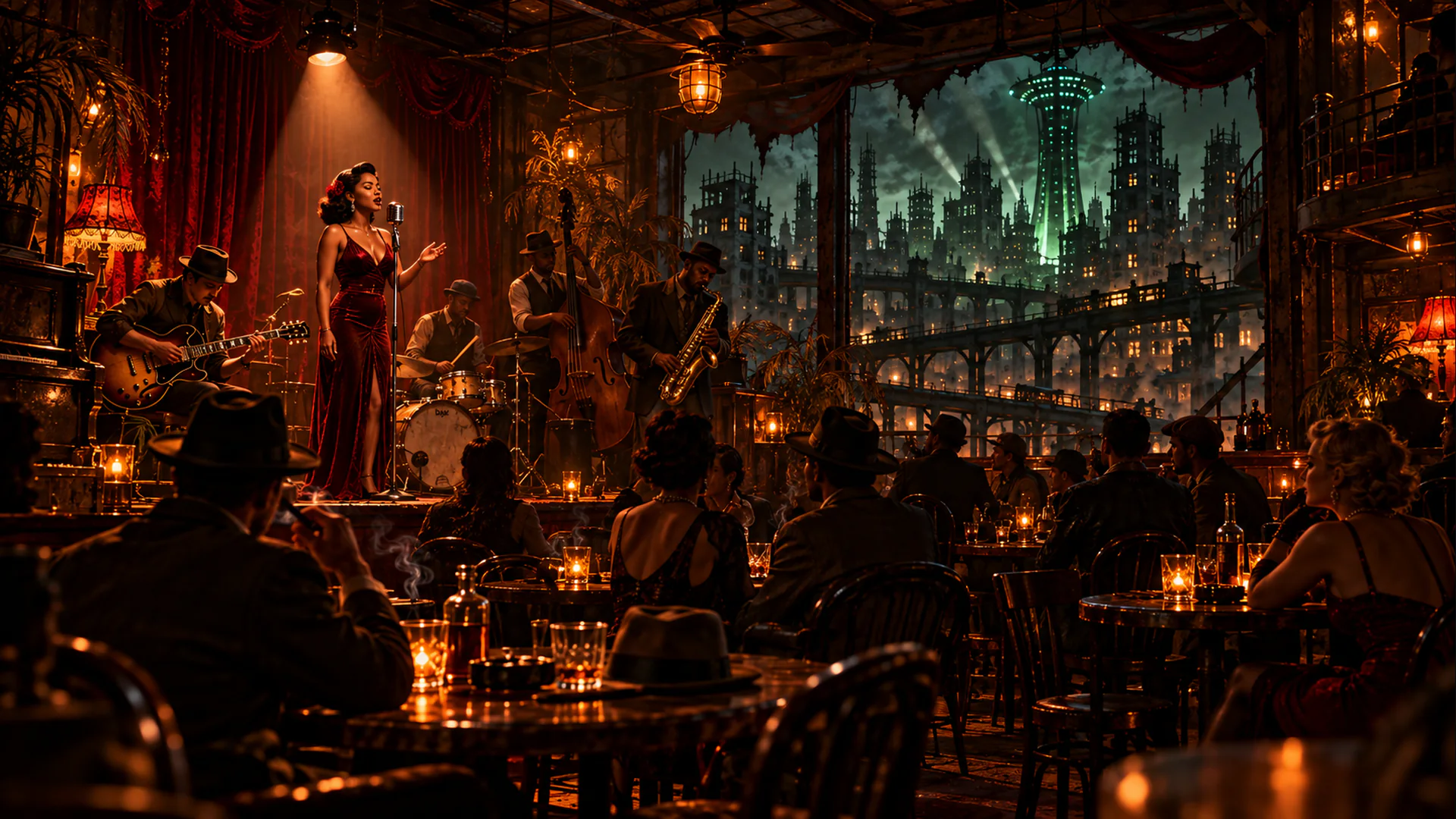
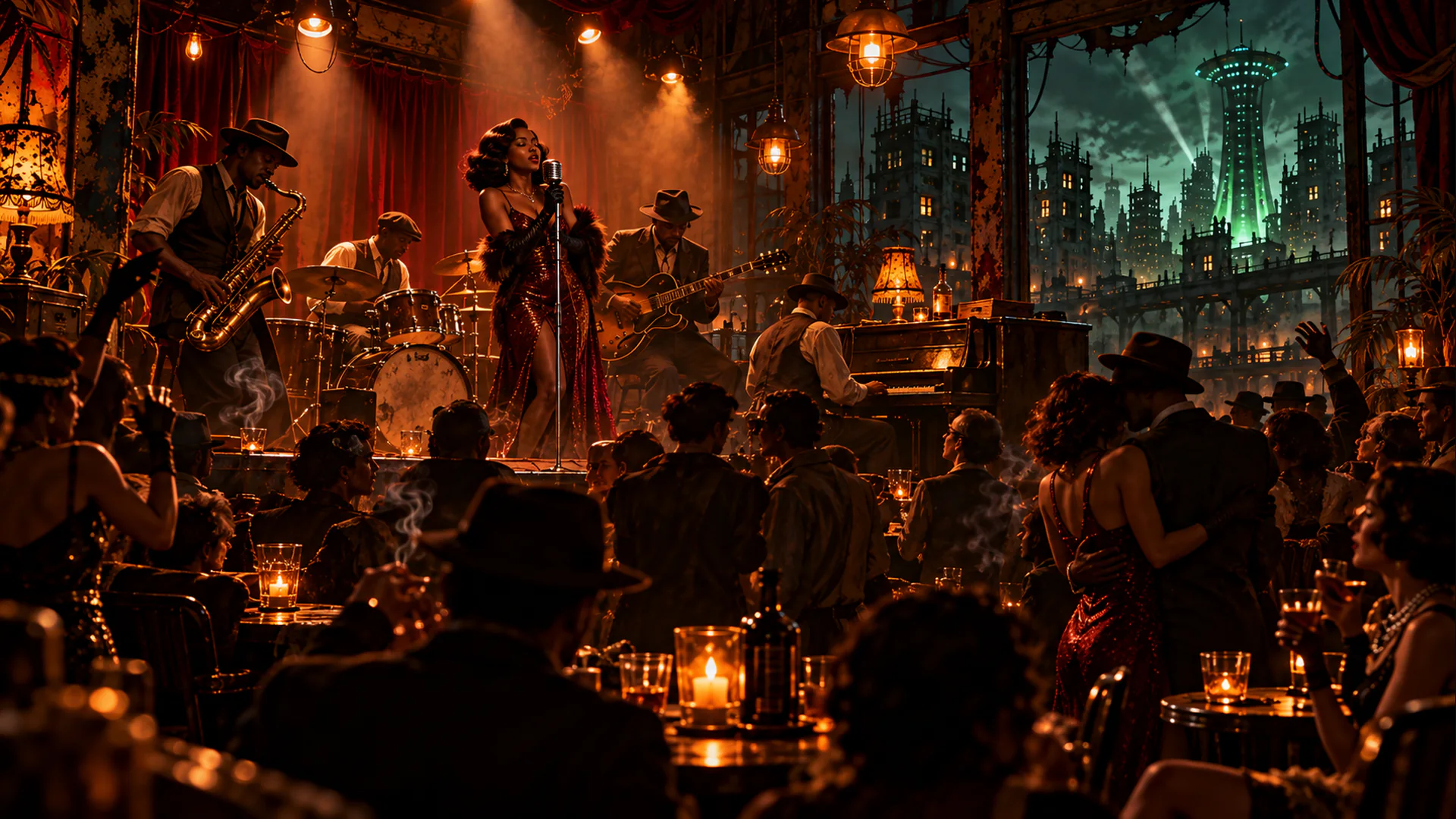
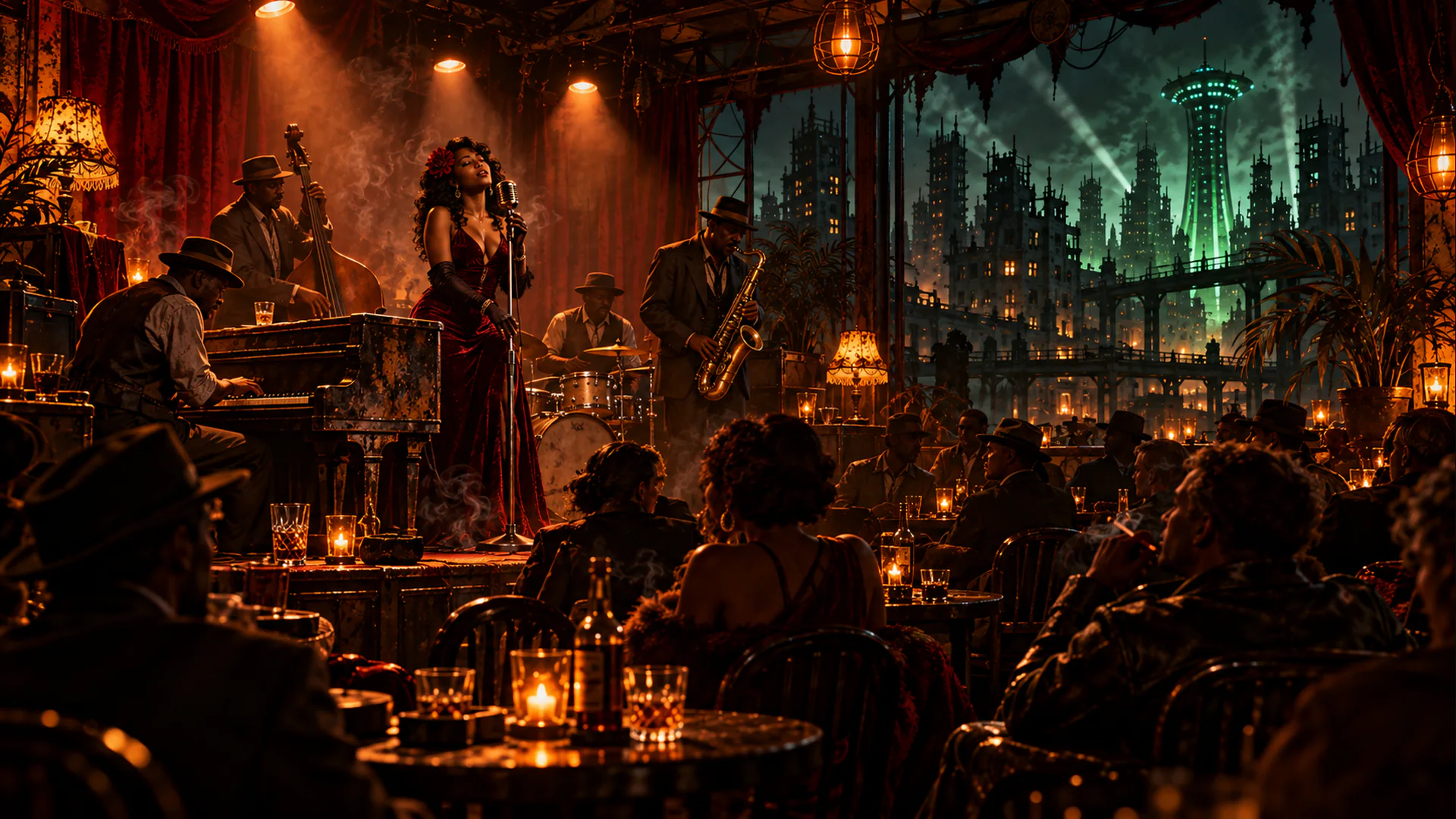
Original illustrated scenes · Timed to the chapter · Captions follow the narration
The listening notes01 / 16
Before the records
A Voice of Your Own
About 2 minutes to listen
Before you look for a famous name on a record label, listen for a person making a little space in the world. A voice stretches a syllable. An instrument answers. Something ordinary, a day's work, an argument, a departure, becomes worth telling. That exchange is a useful place to begin hearing the blues.
Blues developed within Black American communities in the South around the end of the nineteenth century. Its history connects with a broad musical world that includes work songs, spirituals, dance music and other African American traditions. Those connections do not reduce it to a single ancestor. There is no recording of the moment somebody invented the blues, and no one town can hold the whole story.
Nor does the word mean that every performance must sound defeated. A blues singer can complain, flirt, boast, laugh, remember or issue a warning. The same musical phrase can carry several of those feelings. A bright rhythm under a weary voice may be part of the point: a person can have trouble and still want to dance.
As the picture show turns, try listening without asking whether a performance is old enough or rough enough to count. Attend to the decisions. Where does the singer breathe? What happens after the line ends? A tradition becomes audible through people shaping it, one phrase at a time.
In the music Let a vocal phrase finish. Notice whether the instrument answers with agreement, a question, or a little trouble of its own.
A record begins with a decision about whose voice is worth recording. In 1920, Mamie Smith's Crazy Blues challenged the record industry's assumptions about its audience. Its commercial success helped open a much larger market for recordings by Black artists. It did not create the music that listeners already knew; it made an audience harder for the business to ignore.
The women at the center of early recorded blues were experienced entertainers. Stagecraft mattered. A singer had to command a room, give a lyric character and make a small change of emphasis reach the back rows. Ma Rainey, Bessie Smith and their contemporaries brought different personalities to that work. Bessie Smith began recording in 1923 and became one of the era's defining performers.
Listen to the relationship between confidence and vulnerability. A line may describe disappointment while its delivery refuses to surrender authority. The singer decides when to reveal a hurt, when to sharpen a joke and when the band needs to wait. These are dramatic choices as much as musical ones.
The familiar picture of blues as a solitary man with a guitar leaves an enormous part of this history outside the frame. Start instead with a stage, a band and a woman who knows how to hold an audience. Then follow the individual records. The category offers a doorway; the performers supply the lives, voices and differences that make entering worthwhile.
In the music Hear the end of one sentence twice: first for its words, then for the singer's timing, breath and emphasis.
A regional name is a place to start looking, not an instruction for how every musician must sound. The recordings gathered under country blues contain driving dance rhythms, delicate picking, forceful singing, comic turns and songs that cross the borders collectors later drew around genres. A guitar and a voice can make a surprisingly crowded room.
Listen across recordings by Charley Patton, Mississippi John Hurt, Lightnin' Hopkins and other individual musicians before imagining one rural style. Their differences are part of the history. Smithsonian Folkways' country blues collections bring together performers whose approaches resist being folded into a single guitar pattern or mood.
A solo player also has several jobs. The thumb can keep time while other fingers add a melody. A struck bass note can announce the next line. A brief silence can leave the singer exposed. Sometimes a listener hears an apparently loose performance and misses how carefully its parts are held together.
Try giving the instrument one full verse of your attention. Follow its lowest repeated sound, then the small figures above it. When the voice enters, notice what changes and what stays dependable. The arrangement may be made by one person, but it still has an internal conversation.
The surviving records are an extraordinary invitation. They are also a selection made by recording businesses, collectors, equipment and chance. Treat what survives as a set of encounters with musicians, rather than a complete inventory of how an entire region lived or sounded.
In the music Follow the bass movement underneath a vocal line, then listen for the moment the guitar briefly becomes a second voice.
Some guitar parts seem to carry their own little rhythm section. A steady bass walks beneath a melody that skips across it. The effect can be buoyant and beautifully self-contained: one player giving the listener several things to follow at once. The Piedmont tradition offers a rewarding way into that kind of listening.
Associated with the southeastern United States, Piedmont-style blues often uses fingerpicked guitar patterns connected with ragtime piano rhythms. Brownie McGhee was an important exponent. His long musical partnership with harmonica player Sonny Terry gives the ear another conversation to explore, with breath, strings and voices sharing the same space.
Technique alone does not explain the pleasure. A repeating bass can make the room feel secure while the upper notes arrive a little unexpectedly. When a singer starts a line, the accompaniment can keep dancing rather than simply doubling the melody. There is movement below the story as well as inside it.
For a moment, imagine that the lowest guitar notes belong to a bass player. Give them your attention until their pattern is comfortable. Then keep that pattern in your mind while following the brighter notes. You may find that the whole performance changes shape when you can hear its layers separately.
The point is not to turn a favorite song into an examination. It is to notice another source of its life. A quiet performance can have tremendous rhythmic energy, and a gentle vocal sound can sit over an arrangement that is busy, inventive and full of decisions.
In the music Find the repeating low notes first. Keep that pulse in mind while the higher strings and harmonica take their turns.
A journey changes what a song can mean. A lyric about leaving may sound different when departure is an actual decision about a job, a family and the possibility of a safer life. During the Great Migration, millions of African Americans moved from the South to other parts of the country. Music traveled with them.
People sought employment, family connections and a way out of the violence and restrictions of Jim Crow. Cities including Chicago, Detroit and New York became important destinations. These movements changed American cultural life, bringing people, audiences, institutions and musical experience into new relationships.
It is tempting to tell the musical part as a simple transformation: a country sound gets on a train and an urban sound steps off. Real lives were less tidy. Musicians kept ties to earlier homes. Records circulated back and forth. New city audiences could recognize a familiar phrase while asking for a different kind of evening out.
Listen for that combination of continuity and adaptation. A band can grow louder while a singer keeps a highly personal way of shaping a line. A new rhythm section can support a story that still turns on distance, home or separation. A musical language does not have to abandon its memory in order to change.
The train in this chapter is a listening image, not a complete explanation. Behind it are individual decisions made under unequal conditions. Keeping those people in view makes the history larger than a story about instruments becoming electric.
In the music Notice a phrase that feels intimate even when the band is large. The setting can change while the personal address remains.
An electric guitar can hold a note after the hand has stopped striking the string. It can make a small movement of pitch seem enormous. It can answer a voice with a sound that hangs in the air long enough to become another sentence. Amplification gave blues musicians an expanded set of expressive choices.
Chicago became an important center of electric blues, connected with the movement of Southern musicians and audiences into the city. That story sits alongside other developments. T-Bone Walker, whose career linked Texas and the West Coast, helped shape an influential, flowing electric guitar language. There were several routes into the amplified sound, and they continued to overlap.
Listen to what happens between the singer's lines. The guitar does not need to fill every available second. One bent note, a short run or a deliberate pause can establish a personality more clearly than a long stream of notes. The rhythm section makes room for those choices while keeping the performance moving.
Volume is only one part of the effect. An amplifier changes the texture of an attack, the length of a note and the relationship between a player's touch and the sound a listener receives. An expressive phrase may begin gently and acquire an edge as the player leans into it.
Try hearing a solo as speech. Where are its commas? Which thought returns? What does the last note leave unresolved? Electric blues becomes easier to follow when the instrument's vocabulary feels like an ongoing conversation rather than an athletic display.
In the music Listen to one guitar answer after the singer stops. Notice its shape, its silence and the way its final note fades.
A harmonica can disappear into a pocket, then take command of a band. Its sound begins with a person's breath. The smallest change in attack or pressure can make a phrase seem to plead, tease or growl. Put a microphone and amplifier in that relationship, and another range of textures becomes possible.
Little Walter, born Marion Walter Jacobs in Louisiana, became a central innovator of amplified harmonica in Chicago blues. His playing drew on the movement and swing of jazz as well as the force of electric blues. The instrument could carry a featured musical statement, rather than remain a small decoration around the singer.
Notice the contrast between an individual note and a cluster of notes. A player may use a broad, rough-edged sound to establish energy, then narrow it to a clean, sharply placed phrase. The same instrument can seem close enough to whisper in your ear or large enough to answer the whole room.
Breathing also shapes the space between phrases. Try following the pauses without assuming that nothing is happening. A pause can prepare a response, let the rhythm section speak or make the next entrance feel more insistent. Musical breath is part of the arrangement.
There is no need to identify every technique to hear the choices. Start with the first sound of a phrase and its last. Does it arrive abruptly or gather strength? Does it resolve gently or leave a rough edge? A very small instrument can tell a story with a remarkably wide emotional range.
In the music Compare a single sustained harmonica note with a rougher cluster. Listen for changes of breath and the space that follows.
A musical district contains more than the people whose names appear on a marquee. It needs places to gather, people to run them and audiences who decide that tonight is worth going out for. The story of Beale Street in Memphis is a reminder that blues belongs to a social landscape as well as a record collection.
Beale Street's entertainment district is recognized as an important site in blues history. Its importance also reaches into the wider history of Black life and business in Memphis. W. C. Handy is closely associated with the city and the music's early commercial history, but a street full of activity can never be explained by one name alone.
Imagine listening from the edge of a room rather than directly in front of a band. You hear the music with conversation around it. Somebody recognizes a tune. Another person responds to the singer before the next line arrives. The audience is helping establish what kind of occasion this will be.
That imagined room is a listening exercise, not a claim about a particular historic night. Its purpose is to put social exchange back into the picture. A performance made for dancing, a small club or a recording session may organize attention differently. Each setting invites its own decisions about volume, pace, length and emphasis.
Next time the station is playing, give the accompaniment as much attention as the lead voice. Listen for the practical work of making a shared space feel alive. A musical city is built through many such exchanges, repeated by people whose names may never appear on the cover.
In the music Hear the band as people sharing a room: who holds the pulse, who answers, and who makes space for somebody else?
A groove does not have to hurry to hold your attention. Sometimes its power comes from a figure that keeps returning, apparently simple, until the smallest variation begins to matter. That is one useful listening doorway into the Louisiana recordings often described as swamp blues.
Slim Harpo, the performing name of James Moore, was a Louisiana singer, guitarist and harmonica player. His early recordings for Excello, made with producer Jay Miller, became an influential part of this sound. Louisiana's official music history also notes his reach into the work of later rock musicians. Regional connections mattered, even as the records traveled far beyond their first audiences.
The word swamp can conjure a whole movie before a note is played. Set that picture aside for a moment and listen to the arrangement itself. Follow the rhythm guitar or bass through several repetitions. Notice how much room remains around the singer, and whether an answer arrives immediately or waits until the phrase has settled.
Restraint can make a small gesture feel substantial. A change in a drum accent, a brief harmonica response or an extra breath can move the performance without a dramatic change of speed. The interest is in the relationship between repetition and attention.
Goodneighbor's Murkwater Blues is a contemporary station recording, not a historical Louisiana document. You can still use the same listening exercise with it: find the figure that holds the song together, then notice what the voice and instruments choose to do around that dependable center.
In the music Stay with a repeating rhythm for several cycles. Listen for one small change that makes the next return feel different.
A record can introduce a listener to a musician long before there is any chance of meeting the person. During the folk and blues revival, reissues, concerts and festivals helped connect new audiences with artists whose earlier recordings had acquired fresh attention. The records were old. The musicians making new performances were alive and still making choices.
Mississippi John Hurt is one important example. His return to wider public attention in the nineteen sixties brought his singing and intricate guitar work before another generation. Smithsonian Folkways documents concerts organized by Friends of Old Time Music between 1961 and 1965, including return appearances by Hurt alongside many other traditional musicians.
The word rediscovery needs care. An artist could be unfamiliar to record collectors while remaining a known musician in a family or community. The arrival of an outside audience did not create the person's earlier life, musical knowledge or relationships. A useful history keeps that difference visible.
Listen to a later performance without demanding that it reproduce the emotional effect of an earlier record. The instrument, room, tempo and performer may all have changed. A musician can revisit familiar material while telling it from another point in life.
For the listener, the revival offers both access and a responsibility to look further. Follow a festival appearance back to an artist's own recordings and repertoire. Read the notes. Notice who was recorded, who received attention and whose work remained outside the revival's preferred picture. A new audience can open a door; attentive listening continues beyond it.
In the music When comparing two performances, notice a changed tempo or phrase ending before deciding which one you prefer.
A listener can meet the blues far from the place where a particular record was made. A record, a radio program or a touring musician can carry an individual performance across an ocean. The next person to hear it may understand the words differently, but a rhythm or guitar phrase can still make an immediate impression.
By the nineteen fifties and sixties, blues was reaching a growing international audience. Its influence on rock music became especially visible. In discussing the Great Migration, writer Isabel Wilkerson has described a chain of connections in which Black musicians carried Southern experience into cities, recordings reached wider audiences, and listeners across the Atlantic found new musical possibilities in them.
Influence is an invitation to look backward as well as forward. If a later performer leads you to a song, follow the trail to the earlier artist. A familiar guitar figure can become more interesting when you hear the setting it came from and what a later musician changed.
This exchange also raises questions about recognition and opportunity. Enjoying a new interpretation need not erase the people whose work helped make it possible. Names, credits and the circumstances in which music circulated are part of listening carefully.
Try comparing arrangements without treating them as a contest. Does one leave more space around the singer? Does another emphasize the riff or the backbeat? You are hearing musicians make different decisions with related material. The musical family can grow while the history of its Black American foundations remains in view.
In the music Follow one influence backward. Compare what an earlier recording emphasizes with the part a later performer brings forward.
A repeating musical form can feel like a familiar room. You begin to recognize where the doors are, even while the conversation changes. Many blues performances use a twelve-bar cycle: twelve measures that return as the song continues. Knowing the frame can make its variations easier to hear.
One common harmonic outline moves among chords built on the first, fourth and fifth degrees of the key, often called the one, four and five chords. There are many variations. Some performances change the harmony sooner, extend an arrival or use a different form entirely. Twelve bars are a useful doorway into blues, not a requirement that explains every song.
Lyrics may also establish a pattern. In a familiar A A B shape, a line is stated, repeated and followed by an answering line. Repetition gives the singer another chance to alter the meaning through delivery. The final line can explain the situation, turn the joke or reveal what was being held back.
For a first listening exercise, forget the chord names. Find the place where the musical sequence feels as though it starts again. Follow one complete trip around it. On the next cycle, notice where the singer begins relative to that return. A phrase can arrive early, wait or stretch over a boundary.
Once the room is familiar, the furniture starts moving. A guitarist changes an answer. The singer gives a repeated word a different weight. The pleasure comes from hearing invention inside a frame you are beginning to recognize.
In the music Find a musical return, follow one full cycle, then notice one choice that changes on the next trip around.
Tap four comfortable pulses with your hand. Keep the movement even. Now imagine each pulse opening into three small steps. The beat has not become faster; its interior has become busier. That rolling subdivision is a useful way to approach the twelve-eight feel heard in many slow blues performances.
In twelve-eight notation, twelve eighth notes are usually grouped into four larger beats of three eighth notes each. Players may also describe related musical feels in four-four with triplet subdivisions. The notation is a way to explain the organization, not a command to perform every small step with equal force.
A shuffle often gives paired notes an uneven, long-short relationship associated with that triplet feel. Actual performance is more flexible than a diagram. Tempo, touch and the musicians' placement around the beat help establish the groove. Two bands can use a similar outline and make it feel very different.
Listen for a dependable larger pulse first. Then follow the smaller motion in the cymbal, guitar or piano. You may hear the singer take more time over a word while the accompaniment continues its quiet rolling movement underneath. That tension between an unhurried voice and an active subdivision can make a slow song feel full of life.
You do not need to count all the way through a favorite recording. Use the numbers until the relationship becomes audible, then let them go. The point of the exercise is to hear the space inside a beat. Sometimes an entire mood is carried there, in the small distance between one sound and the next.
In the music Tap the four larger beats, then hear the three-part motion within them. Let the singer move freely above that foundation.
A piano key gives you a particular pitch when you press it. A singer can travel toward that pitch, hesitate near it or move away again. Blues instruments often invite the ear into that more flexible territory. A note can feel less like a fixed location and more like a journey with a destination in mind.
Slide guitar makes this especially audible. A smooth object moves along the strings, allowing the player to connect pitches continuously. A fretted guitar bend can also change pitch after a note begins. These are different techniques, but both offer ways to shape a sound beyond its initial attack.
Listen to the beginning of a phrase. Does the note start directly at its apparent destination, or arrive by sliding into place? Listen again to the ending. A sustained tone may settle, shake with vibrato or trail away before it fully comes to rest. Those details help establish the feeling of an instrumental voice.
Blues history also crosses the boundary between secular and sacred performance. The Library of Congress's recording registry includes the work of Blind Willie Johnson, a guitar evangelist whose recordings offer an important path into expressive guitar and vocal sound. Following such an artist's own repertoire is more revealing than assuming that one instrument belongs to only one kind of song.
For this exercise, choose just one held note. Let the rest of the arrangement become background for a moment. Hear how much happens between the attack and the silence that follows. The note may contain a whole small drama without needing a single extra word.
In the music Follow one held note from its first attack to its last vibration. Notice how pitch, pressure and volume keep changing.
A story does not always need a large event. An unanswered message, a kitchen light left on or an empty place at a table can suggest a relationship without explaining its entire history. These are invented examples, but the exercise is useful: listen for the concrete detail that gives a song its particular world.
Blues can address work, desire, separation, pleasure and the practical difficulties of getting through a day. It can be direct or use a joke, a boast or a double meaning. A listener who expects only sadness may miss how much personality and social observation live in the words.
The musical delivery changes the story, too. A repeated line does not have to repeat the same intention. The first statement may sound certain; the second may expose a doubt. An instrumental answer can seem to underline the singer's point or make a mischievous comment of its own.
Try listening once for objects and actions rather than for a general mood. What actually happens? Who seems to be speaking, and who might be listening? Then hear the performance again for the places where the voice and accompaniment complicate that first impression.
The history of blues should not be reduced to a collection of colorful hardships. These songs involve artistic decisions made by particular people. Listening for craft gives those decisions their due. A phrase that sounds effortless may be doing several jobs: establishing a character, finding a rhyme, making room for the band and letting the listener recognize a piece of ordinary life.
In the music Choose one concrete detail in a lyric. Hear how the singer changes its meaning through emphasis, timing or repetition.
There is a difference between visiting a musical history and claiming to contain it. These chapters are an introduction: a few people, places and listening paths through a much larger Black American tradition. The best next step is to follow one of those paths into the artists' own work.
Read a recording's notes. Learn who is singing, who is playing and when the performance was made. Compare two versions because their differences interest you. When a new favorite points toward an earlier influence, follow the connection. A library, museum archive or carefully documented record collection can turn one evening's curiosity into years of listening.
Goodneighbor is a contemporary creative project. Its original station recordings use AI-assisted music tools, and the chapter narration is synthetic. The illustrated room and these listening essays are part of the site's present-day setting. They are not archival recordings, eyewitness testimony or a substitute for the musicians whose history the sources document.
What the room can offer is time and attention. Let the pictures change while a song finds its pace. Follow the words if you want to, or leave the text alone and listen to an instrument finish a thought. You do not have to turn every minute into a lesson.
Then take something with you: a name to look up, a new way of hearing a rhythm or a question about where a sound came from. The station keeps turning. The history continues through living musicians, working communities and listeners willing to seek them out. There is more music beyond this room, and another story waiting when you return.
In the music Choose one artist from a chapter's sources, seek out their recordings, and give one unfamiliar performance your full attention.